
Ledger.com/Start® | Getting started® — Ledger Support
Use Ledger.com/start to learn about Ledger hardware wallet setup, compatible Ledger Live software, recovery protection, account organization, and secure crypto management.
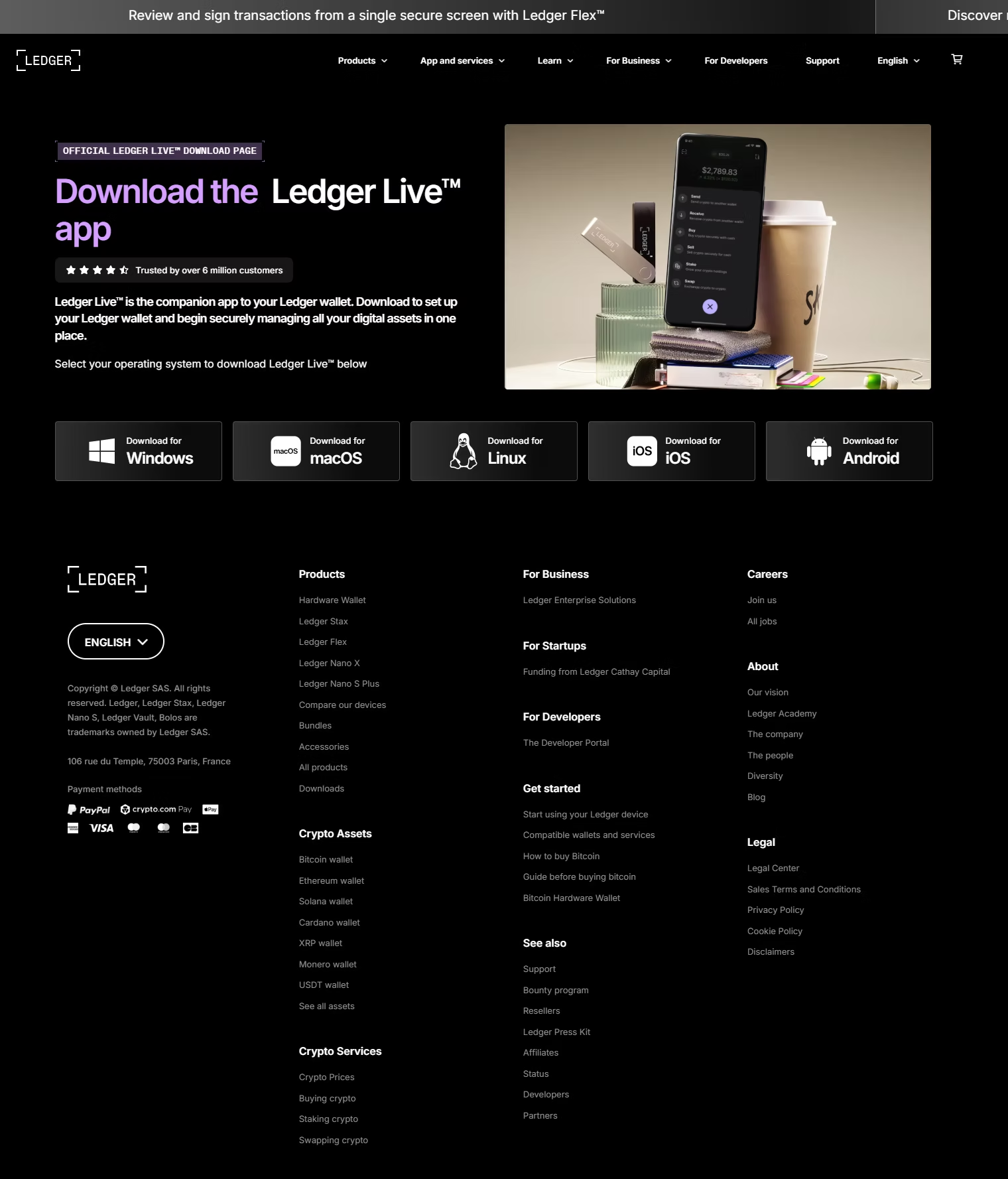
Ledger.com/start: A Complete Guide to Setting Up and Securing Your Ledger Wallet
Setting up a hardware wallet is an important step for users who want to manage cryptocurrency through a dedicated security device. The process involves more than connecting a wallet to a computer. Users need to understand device initialization, access protection, recovery information, compatible software, account management, and transaction verification before using the wallet regularly.
Ledger.com/start can serve as a starting point for users beginning their Ledger wallet setup. It can help introduce the general onboarding process and the security considerations that should be understood before managing supported digital assets.
A hardware wallet can provide an additional layer of protection by keeping sensitive transaction-authorization operations associated with a dedicated physical device. However, technology alone cannot eliminate every risk. Safe wallet management also depends on how users protect their recovery information, verify transactions, identify suspicious websites, and respond to unexpected messages.
This guide covers the key areas users should understand when preparing a Ledger device, completing the initial setup, connecting compatible software, managing accounts, and developing better security practices.
Understanding Ledger.com/start
Ledger.com/start is associated with the beginning of the Ledger hardware wallet onboarding experience.
For a new user, the setup process may involve configuring the physical device, establishing access protection, generating recovery information, connecting compatible wallet software, and preparing supported cryptocurrency accounts.
The exact setup experience can vary between Ledger products and software versions. Different operating systems and device models may also present different instructions or available features.
Because of this, users should follow the instructions applicable to their particular Ledger device rather than relying entirely on an older tutorial or instructions intended for another model.
Why Hardware Wallet Setup Requires Attention
A hardware wallet is designed to provide a dedicated environment for managing important cryptocurrency security operations.
When supported transactions are created, the physical device can be used to review and authorize transaction information.
This can provide an additional security boundary compared with relying entirely on a general-purpose computer.
However, users should remember that hardware wallets do not automatically protect against every type of threat.
A user can still be affected by phishing websites, fraudulent wallet applications, social-engineering attacks, exposed recovery information, or approving an incorrect transaction.
Good security therefore begins during setup and continues throughout everyday wallet usage.
Preparing for Your Ledger Wallet Setup
Before opening the setup process, choose a private and comfortable environment where you can focus on the instructions.
Use a trusted computer or compatible device and avoid installing unfamiliar software before beginning.
Do not depend on links received from unknown people or advertisements that promise quick wallet assistance.
Wallet-related scams often attempt to make users believe that they need to download an application immediately or provide sensitive information to complete setup.
Allow enough time to read each instruction carefully.
A hardware wallet should not be configured while you are distracted or rushing through security prompts.
Beginning Device Configuration
After locating the appropriate setup instructions, connect the Ledger hardware wallet according to the requirements of the specific model.
The physical connection, menus, and configuration options can differ between devices.
During the process, pay close attention to the information displayed directly on the hardware wallet.
The physical screen can be an important point of verification when the device asks you to confirm a security-related operation.
If something appears unexpected, do not approve it automatically.
Stop and determine why the information is different before continuing.
Completing the Initial Initialization
Device initialization establishes the initial configuration needed for future wallet activity.
Depending on the device, users may be asked to configure a PIN, confirm security information, and complete the recovery setup.
Every part of this process should be treated as important.
Avoid allowing another person to initialize the device for you without understanding what they are doing.
The purpose of a personal hardware wallet is to give the owner greater control over sensitive wallet operations, so the owner should understand the security information created during setup.
Securing the Recovery Information
Recovery information is one of the most important elements of a self-custody wallet.
During the appropriate initialization process, a recovery phrase may be generated that can be used to restore access to the associated wallet through a compatible recovery procedure.
This information should be treated as confidential.
Write down the recovery information carefully using the recommended setup procedure and store the backup in a secure physical location.
Do not save the phrase in screenshots, photographs, cloud storage, email, messaging applications, or other internet-connected services.
Never give the recovery phrase to someone who contacts you claiming to provide technical support.
Understanding the Role of the Recovery Phrase
The recovery phrase and hardware device have different functions.
The physical device can be used to authorize supported operations, while the recovery phrase can provide a method for restoring wallet access if the original device is lost, damaged, or unavailable.
This makes recovery information extremely sensitive.
Anyone who gains access to the complete recovery phrase may potentially be able to restore the wallet using compatible tools.
A website that asks users to type their complete recovery phrase should therefore be treated with extreme caution.
Creating a Secure PIN
A Ledger device may require a PIN during initialization.
Choose an access code that is not obvious and avoid combinations that another person could easily guess.
Do not write the PIN in a publicly visible place or disclose it to another person.
Physical access also matters.
Store the hardware wallet somewhere secure when it is not being used.
Combining appropriate device access protection with secure physical storage can reduce opportunities for unauthorized access.
Connecting Compatible Wallet Software
Once the hardware wallet has been initialized, compatible Ledger software can provide an interface for managing supported cryptocurrency accounts.
Depending on the supported asset and software environment, users may be able to review balances, manage accounts, install required blockchain applications, monitor activity, and prepare transactions.
The software interface should not be confused with the hardware security device itself.
The application can provide convenient account-management features, while the physical wallet can remain involved in supported transaction authorization.
Understanding this distinction helps users develop a clearer picture of how hardware-wallet security works.
Organizing Your Cryptocurrency Accounts
Users managing multiple cryptocurrencies may maintain several accounts.
Good organization can make it easier to identify the correct account before receiving or sending funds.
Before starting a transaction, confirm the asset, account, and network involved.
Similar account names can create confusion, particularly when several accounts are used for different purposes.
Clear labels and careful review can help minimize avoidable mistakes.
Receiving Cryptocurrency Into a Ledger Account
Receiving cryptocurrency generally involves sharing a wallet address with another person or service.
Before sharing an address, confirm that it belongs to the intended account and is compatible with the asset and network being used.
Different networks can have different requirements, and an address that looks familiar should not automatically be assumed to be suitable for every asset.
For larger transfers, some users may prefer to test the receiving process with a smaller amount first.
This can provide an opportunity to confirm that the address and network are correct before moving a larger balance.
Checking Transactions Before Approval
Transaction verification should become a regular habit.
Before confirming a transaction, review the destination, amount, asset, network, and fee information that is available.
When the physical hardware wallet displays transaction details, compare them carefully with the transaction you intended to make.
Do not approve an operation simply because the computer or browser interface looks correct.
If the information shown on the hardware wallet does not match your intended transaction, stop immediately.
Blockchain transactions can be difficult or impossible to reverse after confirmation, making verification especially important.
Protecting Against Fake Ledger Pages
Phishing remains one of the major security concerns for cryptocurrency users.
A fraudulent page may imitate the design, language, or branding of a legitimate wallet service.
The objective may be to convince users to disclose recovery phrases, passwords, PINs, or other confidential information.
Be suspicious of messages that create urgency.
Warnings about account suspension, security problems, wallet verification, or supposed asset loss can be used to pressure users into making quick decisions.
Instead of following an unexpected link, independently navigate to a trusted Ledger resource.
Never enter a recovery phrase simply because a website claims it is needed to verify, synchronize, activate, or secure a wallet.
Avoiding Unofficial Support
Another common risk comes from fake support representatives.
Scammers may approach users through social networks, community forums, messaging platforms, or direct messages.
They may claim that they can repair a wallet or resolve a synchronization problem if the user provides confidential information.
Do not assume that a person is legitimate because their profile looks professional.
Never share a complete recovery phrase or other highly sensitive wallet credentials with an unsolicited support contact.
Keeping the Wallet Environment Maintained
Wallet software and hardware environments can change over time as new versions are introduced.
Users should follow legitimate update instructions applicable to their device and software.
Before installing an update, verify that the source is trustworthy.
Avoid applications or firmware files obtained from unfamiliar websites.
It is also useful to ensure that recovery information remains safely stored before performing significant wallet maintenance.
Common Errors During Ledger Setup
New users can make several mistakes during the onboarding process.
One is rushing through the setup without understanding the security prompts.
Another is incorrectly recording recovery information.
Some users may also be tempted to create a digital copy of the recovery phrase for convenience, which can expose it to additional risks.
Downloading a counterfeit wallet application is another serious concern.
Users should also be cautious about anyone offering unsolicited assistance and asking for remote access to their computer or hardware wallet.
If someone requests your recovery phrase, treat the request as a major security warning.
Verifying Transactions on the Physical Device
The physical hardware wallet provides an important verification point during supported transactions.
Before approving an operation, carefully review the information presented on the device.
Compare the destination and amount with what you intended to send.
If the details are unexpected, do not confirm the transaction.
This additional verification step can help identify mistakes or suspicious transaction changes before they become permanent.
Maintaining Better Wallet Security Habits
Security should continue after the initial Ledger.com/start setup has been completed.
Keep the physical wallet secure, protect the recovery information, use trusted software, and remain careful with cryptocurrency-related communications.
Avoid making important decisions when a message is creating unnecessary pressure.
Take time to independently verify unexpected requests before responding.
A cautious approach can reduce the likelihood of falling for common cryptocurrency scams.
What to Do When Something Seems Unusual
If a website, application, hardware device, or transaction displays something you did not expect, stop before approving the operation.
Do not attempt to solve an unfamiliar problem by entering your recovery phrase into a website.
Close suspicious pages and consult reliable documentation for the relevant device or software.
Be particularly careful with unsolicited assistance received through social media or messaging services.
When dealing with wallet security, protecting confidential information should take priority over completing a setup step quickly.
Final Thoughts
Ledger.com/start can be a useful starting point for users who are preparing a Ledger hardware wallet and learning the fundamentals of secure cryptocurrency management.
The setup process includes more than connecting a physical device. Users should understand device initialization, PIN protection, recovery information, compatible wallet software, account organization, transaction verification, and phishing awareness.
Recovery information deserves especially careful protection because it may be important when restoring access to a wallet. It should never be shared with websites, strangers, or unsolicited support contacts.
By taking time during the initial setup, verifying transaction information directly on the hardware device, using trusted software, and maintaining strong security habits, users can create a more careful and informed approach to managing supported cryptocurrency assets with a Ledger hardware wallet.
Updated about 8 hours ago